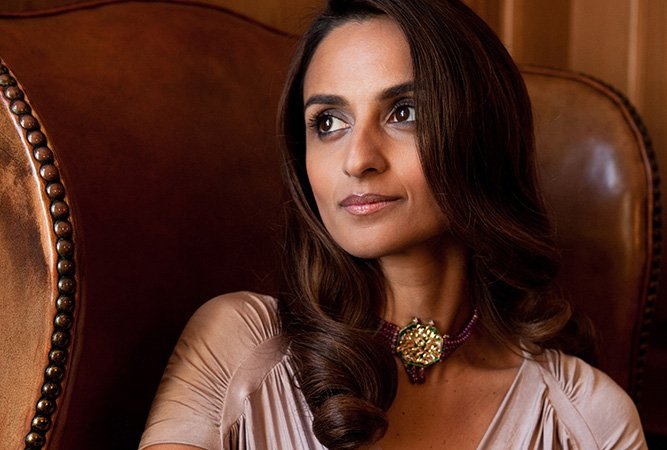

Tell us about yourself. What prompted you to embark on your career journey?
If there was a prediction about it, I’m not sure someone could have guessed I would become a film director and artist. I didn’t come from a family who watched much TV – we were quite an academic, large and rather Catholic Australian family – much more about books, about the classics and I guess we had an analogue, do it by hand kind of approach to learning. Ironically I guess for a filmmaker, I grew up with parents who when they finally decided to buy a TV, fitted it with doors and kept it under lock and key. Watching the TV was a rare occasion and constituted mainly of the Olympic Games, the evening news and a black and white matinee movie on a Sunday while we peeled veggies for the roast after Church! That said, my Italian Grandfather had an old Super 8 camera which he loaned me on occasion. I was fascinated by this unchartered territory of recording images to film. He gifted me this camera when he passed away in my early teens and I still have it today. My parents both studied abroad and were in many ways counter cultural – self starters, a concert pianist and barrister respectively – they encouraged me and my many other siblings to be expressive and for better or worse, to interrogate life. They placed an emphasis on curiosity and questioning, which I hope I have carried with me on my career path into the film industry. More and more I realize I’ve been influenced considerably by my Catholic background too – the language system, history, storytelling and symbolism, as well as the connecting tissue to the development of the judicial system, philosophy and social justice – all these things have played a part in shaping my point of view as a person and filmmaker.
Needless to say, I always loved painting, drawing and making things, my mother as a musician and composer ensured we grew up exposed to a lot of interesting creative influences as well as making music and playing instruments. I excelled at school and was encouraged to pursue a profession in the law like my father, but realized very early into my degree that I really wanted to be creative. What that meant specifically I didn’t really know and naturally my parents were very worried about what my path would be in life. Initially I studied a double degree in Design and Film at University at the University of Technology in Australia and became really interested in cinema, cinema history and the development and application of ideas, aesthetics and narrative principals. I distinctly remember a moment where I thought to myself that perhaps I could try and be a filmmaker like so many of my film heroes (mainly the Italian Neo-realists, Russian, Polish and Japanese film makers working within the first 60 yrs of cinema). I started experimenting with my own short films, animations and short documentaries, watching more and more films.
After my first degree I started to work for different production companies, often in the design department, for short films and commercials. I also shared an art studio with a very talented painter, working on canvases as well as on film sets as a prop maker and scenic painter. I had the opportunity to participate in a lot of interesting movies and projects and it inspired me even more to want to be a Film and TV director myself. I decided I really needed to know more and applied to study Screen Directing at the prestigious Australian Film TV and Radio School (boasting alumni like Academy Award winners Jane Campion, Peter Weir, Fred Schepsci and Gillian Armstrong, who are still some of my favorite filmmakers).
After this period of study I was really struggling to pull together enough money to make my own films and spent a lot of time still working on other peoples projects. I became a little burned out and decided to travel to India with my younger sister Helena. I took my basic camera kit with me and started making a very loose video diary of our experiences living and working in India. This was an incredible experience and really shaping in many ways in prompting me to very seriously explore a career in the film business. After I returned to Australia I started to edit this material into what became a 1 hour documentary called SISTERS which has been broadcast around the world.
During this time I started to make my first ultra low budget feature length film in Sydney’s red light district, which garnered some attention at festivals and taught me a great deal about the filmmaking process. I also started to fashion elements of my sister and my experiences working in orphanages and care centers in Kolkata into a feature film script. This became the basis of my second feature film THE WAITING CITY, which was shot entirely on location in Kolkata, India. These experiences have become a jumping off point for a professional practice and visual storytelling approach in the feature film and TV space, which is where I have been subsequently working for the last 13 years.
What was one of the most inspiring moments for you directing the “The Colour Room”
There are so many inspiring aspects of directing The Colour Room, it’s very difficult to narrow it down to just one! We filmed during the global pandemic, which was a complicated feat attempting production at this time. Looking back I feel so lucky to have worked on a special project with such an inspiring story and message, with such an enthusiastic and talented group of people. We really kept driving forward in solidarity and innovation even when the situation made work logistically or emotionally difficult.
So often stories celebrate male artists. This film is a story about Clarice Cliff, a woman who is an incredible artist who found a really clever way to not only revolutionise the way pottery was made but also figure out the intersection of art and commerce in how the work was manufactured. This is very much a working-class, underdog story about an ordinary woman from Stoke-on-Trent, with an extraordinary gift. Clarice didn’t have a formal education – she paid her own way through school, was awarded scholarships and learned on the job. Her maverick spirit saw her bust through every obstacle in her path, to figure out creative ways around a problem. Clarice’s innovative approach to her work not only produced a prodigious amount of pottery and employed countless people, she also saved jobs and elevated the ceramics industry at a time when everyone was so uncertain about the future.
Before starting work on The Colour Room, I knew about Clarice Cliff’s work, but I’d never done a deep dive into the cultural landscape in which she created her art. There was an economic crisis happening at that time in the Staffordshire Potteries, but it was also a dynamic socio-economic hotbed. There were many people from different cultural and religious backgrounds working in Staffordshire at the time.We can see in the work how much Clarice was influenced by the shock of the new, of Modernity – music, textiles, fine art, approaches to patterns and colour, this all fed her aesthetic vision. Her idea was less firings, less use of expensive enamels, at a lower price point aiming at less well heeled consumers.
Her customers were overwhelmingly women.
I wanted the movie to represent the different voices and cross-sections of that time and community, and to also raise the question – who has the right to curate taste? To say what beauty is? To dictate what we have in our homes and on our tables? Clarice’s work was simple, colorful and fun, was designed to be manufactured more efficiently and sold at a cheaper price point. In many ways she made beauty as well as functional and fun design accessible to everyone.
The real genius of Clarice’s work is that she not only sought to inspire people through new uses of colour, form and pattern. She also saw the potential of discarded undecorated stock (bisque ware) and worked these shapes into new pieces and designs. She took what was otherwise trash and made it into treasure.
The other thing that particularly inspires me about Clarice is that she had such solidarity with other women, and she unashamedly altered the industrial workplace and conditions at that time for the better. She fought for better wages, more reasonable work hours and for a work environment that was open plan, encouraged music, discussion and had a distinctly collaborative atmosphere. In many ways I’ve always seen this story as a kind of industrial revolution. Clarice was a unique visionary, leading her army of women, championing change in rooms where only men were listened to. She really did forge a completely unique and singular path. And she was such a naughty, fun lady. My hope was to try and capture that essence of Clarice’s revolutionary, rebel spirit.
How was it working with Phoebe Dynevor?
It was a joy and pleasure working with Phoebe. What a talented, dedicated and bold actress!
Phoebe had just completed the first season of Bridgerton, and she was quite interested to play Clarice, whose background and physicality are so different from her role on that series. We both wanted Clarice to be earth-bound and sturdy, with broad shoulders and a confidence in the way she walked, talked, made things, dressed. We had lots of involved discussions breaking down who Clarice was, how she moved through space and how to take her on this emotional journey across the film.
It was important to both Phoebe and I that she disappeared into the role of Clarice Cliff, which I think she did so thrillingly. This is such a gift to me as a director to be able to work so closely with actors in the process of finding their character and a testament to Phoebe’s skill and commitment to this role about what she has achieved artistically in the film.
What are some of the biggest challenges you have encountered as a director?
The film industry can be all consuming! Though it is such a honor to be making films it is so resource heavy and very expensive which makes it a complex puzzle to put together. It’s normal to have gaps between projects. During these gaps, there is a lot of uncertainty when you are waiting for commitments from financial partners, waiting for money to be triggered by important actors with many demands on their time. The uncertainty and the waiting – the slow burn – that is the biggest challenge for me as a director. I’m waiting for a time when hopefully there is not so much waiting!
With these industry patterns, it’s important I’ve found to have balance and to make sure to have passions and interests outside the biz; to look after my physical and mental health and to nurture relationships with my family and friends.To find time for connection and renewal until the next adventure starts!
All these things are obvious, and yet mysteriously hard to maintain. When I’m able to really lock into my outside passions and interests, I also find it makes me a better director.
We’re slowly seeing a shift in the entertainment industry and women like yourself are moving to the forefront in having their voices heard. As someone who is at the forefront of storytelling, what responses are you seeing? What can women do to accelerate this? What else are you watching, seeing, observing?
Yes, I definitely think there has been a shift – but I think there’s a lot more to be done. We’re trying to overcome a circular problem – women are not given as many opportunities, and then women are perceived to lack experience.
To see true and abiding change, we need executives and producers to make bold decisions to explore new talent and to provide genuine opportunities for women and lesser heard voices is crucial.
Having platforms where women can be vulnerable and discuss their journeys is vital. Men are crucial in making bold decisions to support women too. I’ve found it has often been men who have really made room for me at the table and had faith in me as a creative leader, which has made a huge difference to my career. I do think women work so hard to get their tiny slice and it makes it harder for them to share and to empower others. Women need to champion women more – to be less critical of themselves and others and to find ways to elevate and advance the conversations about us as consummate jugglers, nurturers, story tellers, adventurers and leaders.
What was your experience filming in India?
My sister and I were in Kolkata for 6 months all up working in care centers for the dying and destitute and with Mother Teresa’s nuns at several orphanages. What struck me about the orphanages was the tension between Westerners coming to meet their baby for the first time, and what the impact of taking this child out of their culture, out of their roots really means long term, even with the promise of boundless opportunity.
I later went back to India and filmed a fiction feature film, based on some of the couples I had met and interviewed previously as part of the documentary. I had talked to them about the responsibilities and complexities of adoption, though the feature is not so much an adoption story but more about the complications with the marriage of a Western couple who think the answer to their problems is to adopt a child.
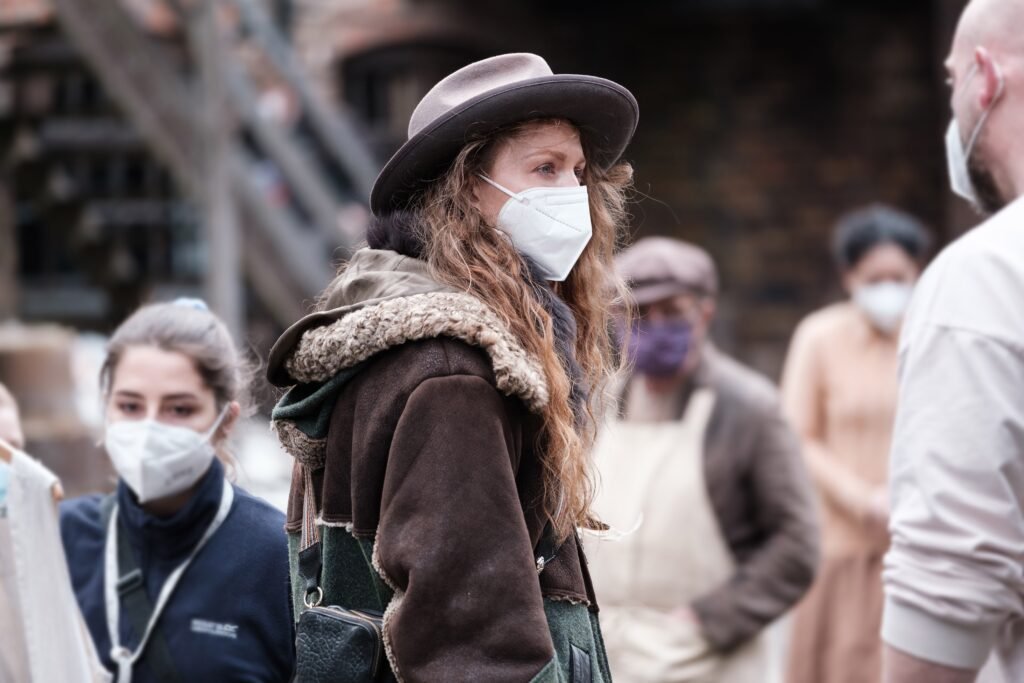
It was complex filming in India. There were seven languages on set so I had to figure out very quickly how to articulate ideas and high visual concepts so things wouldn’t be, quite literally, lost in translation. I couldn’t rely solely on people hearing my voice and understanding my words.
I used photographic storyboards, concept models, mud maps, everything I could to be really clear about what we needed to do as a team. This was a great experience as a filmmaker on many levels because it taught me a great deal about the nuances of communicating a vision. Perhaps this experience gives me an extra edge now as I make bigger productions with even more complex moving parts – I find it all a lot less daunting to juggle intricate set pieces and logistics and hopefully I communicate my ideas and creative strategies more clearly as a result too!
What advice would you give women and girls who want to go into the film industry?
Sometimes people think it’s too tech complex and expensive to get started in this industry. We now all have access to sophisticated mobile phones, laptops, sound mixing and music software on our computers making it accessible to anyone who wants to start making their own projects. When I started, I made my first feature film with virtually no money and an incredible amount of support and enthusiastic collaborators and learned so much doing it. This is a medium best learned by doing – film theory is really only one aspect of it, an important part but only one of many.
I recommend investigating yourself – who you are and what makes you tick. Working on yourself and your own strengths and challenges helps to understand others too. I also recommend absorbing the world – visit galleries, watch other peoples films, listen to music – keep an open mind. Start to keep track what inspires you, what you are drawn to, what sparks bliss for you. Look into the history of cinema and of the arts. The more curious someone is about people, culture and politics, the more rich and deep their work will be. Nothing is off the table for personal research because inspiration is not just about only the formal elements of constructing a film, it is about ideas, about emotion and about storytelling.
When you look at the base of it, moviemaking is really about exploring the human condition, and is ideally a complex collaboration with a strong creative team. This is where the magic is found, in collaboration and in the sharing of ideas and experiences. An audience will connect more with truthful honest emotion than they will to a visually beautiful film that has nothing to say for itself.
Final thing I’d say is be prepared to work a lot for free. This will give you a broad sense of everyone’s role and this will also spark ideas about where you might really want to position yourself. Get in there and be prepared to get your hands dirty, that would be my advice.
With all the work you have produced, which one is one of your favorites and why?
I know it’s really hard to say because it’s like asking which of your children is your favorite!
It’s a really good question! I gave so much to all of them, and yes they are like my children.
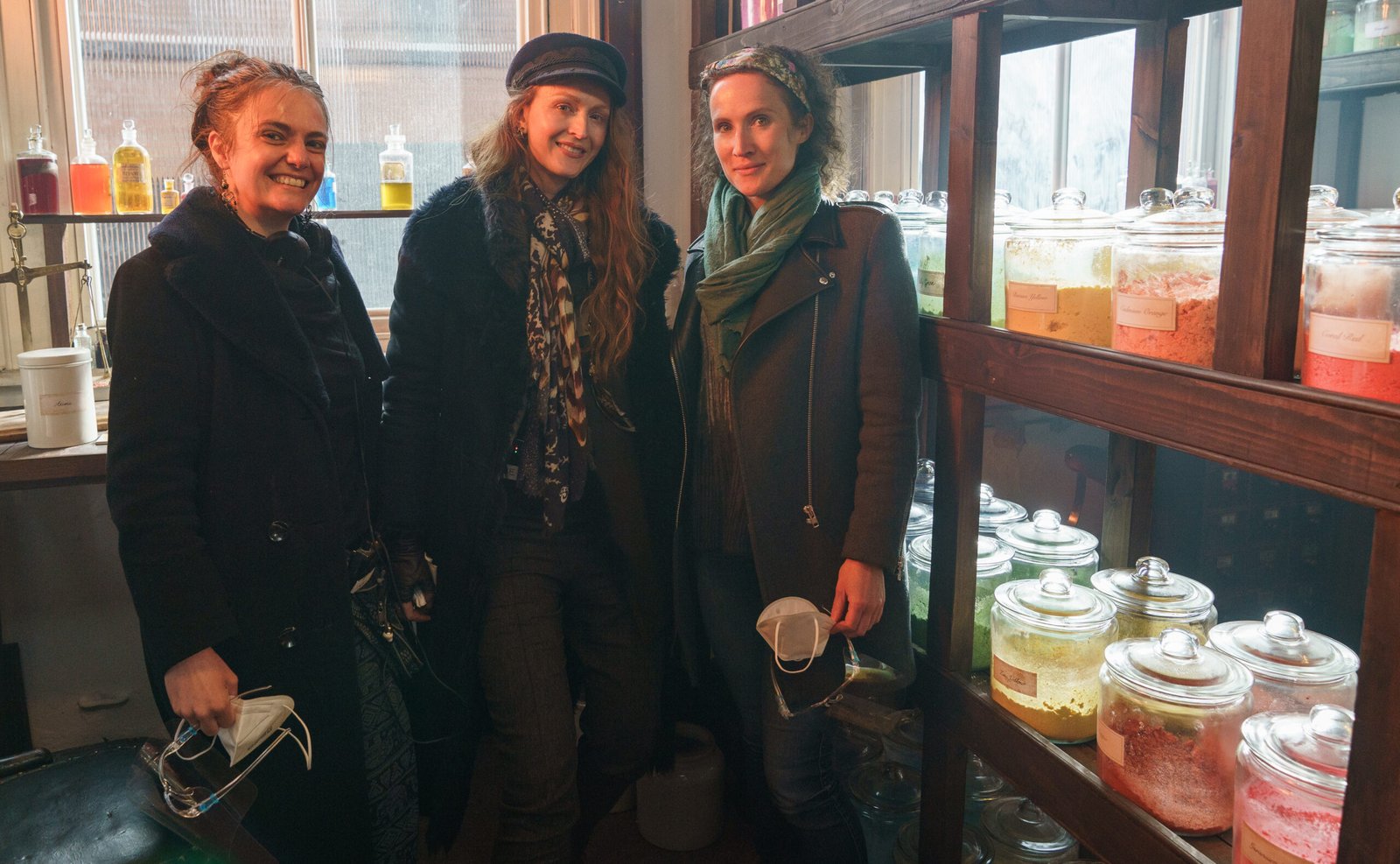
While my television experiences are close to my heart particularly because of brilliant heads of department and the actors I’ve had the honour to work with, I have to say this last project —The Colour Room—has been really fulfilling creatively because I so enjoyed the collaboration with this particular creative team. This film was a real challenge but it was a collaborative and respectful process from really honing the script with the wonderful writer Claire Peate, my brilliant producers Georgie Paget and Thembisa Cochrane, my incredible cinematographer Denson Baker, the design team and of course the stunningly talented cast of actors! I also so loved working with my editor, the beautiful Hoping Chen and my brilliant composer Nitin Sawhney.
The Colour Room has been so fulfilling on the level of really achieving very clearly what we all set out to achieve. The film represents such a close collaboration between all the filmmakers in a very special way. I believe collaboration yields the best results – which means listening as much as inciting!
What are you working on now?
I have several projects at various stages of the process – I’m working in collaboration with some really interesting writers and producers on a number of film and TV projects that are very close to production.
I’ve found that the landscape has changed a lot recently and the lines between TV and Film have blurred, which is really exciting. TV is now a much bigger canvas – the series I recently directed and Executive Produced in New Zealand, a film called THE LUMINARIES. It was like making 3 feature films back to back! I loved the scale, scope and the rigor that’s required for this kind of storytelling.
I’m really close to production on an eco-political drama called THE BURNING SEASON which is part of the trilogy of films focussed on the tensions and connections between developing nations, that started with THE WAITING CITY (the project I made in Kolkata India.) This film is a mother and daughter story set in the jungles of Madagascar, and hopefully it’s going to be shooting this year.
I also have a film Ihave been developing for some years with Academy Award winning actress/producer Viola Davis called THE PERSONAL HISTORY OF RACHEL DUPREE. We have been so fortunate to have attached some incredible actors and we are planning to shoot this next year…